
Medically Reviewed by Dr. Martha Silva, DDS, FAGD on September 30, 2026
Professional teeth whitening reduces sensitivity by controlling the variables that cause it: how strong the whitening gel is, how long it stays on your teeth, whether it touches your gums, and whether your enamel is protected before and after treatment. Imagine having a smile so radiant it lights up a room, yet free from the sharp twinges that make you hesitate before that first sip of coffee or bite of ice cream. Professional teeth whitening is designed to deliver both brightness and comfort, and for most people any sensitivity that does occur is mild and temporary.
At Floss & Co., we believe a brighter smile shouldn’t come at the cost of your comfort. Our team combines state-of-the-art whitening technology with personalized care, offering both in-office whitening for same-day results and custom take-home trays for patients who prefer to whiten on their own schedule. We check your teeth and gums first, then tailor the approach to your starting shade and sensitivity level so you can brighten with confidence.
Why Whitening Can Cause Tooth Sensitivity
Tooth sensitivity during whitening happens because peroxide-based whitening agents move through the enamel and into the dentin layer beneath it. Dentin is full of microscopic tubules that lead toward the nerve, so when those pathways are temporarily more open, hot, cold, or sweet foods can trigger a sharp, short-lived zing. Over-the-counter whitening products can intensify discomfort when they are overused, applied unevenly, or allowed to sit on exposed gums.
Professional whitening treatments take a different approach. We evaluate your enamel health before beginning treatment and adjust the whitening formula based on your sensitivity level. Then, we apply protective barriers to your gums and use controlled concentrations of whitening agents that work efficiently without overwhelming your teeth. This careful process means you get noticeable results while your comfort remains a top priority throughout the treatment.
Who Is More Likely to Feel Sensitivity?
Some people are more prone to whitening sensitivity than others. Exposed root surfaces from gum recession, thin or worn enamel, untreated cavities, cracked teeth, and leaky fillings all give whitening gel an easier path toward the nerve. That is why we check for these issues before whitening and treat them first when needed. If you already have sensitive teeth day to day, let us know so we can adjust your plan from the start.
Advanced Techniques That Protect Your Teeth
Modern cosmetic dentistry has developed several approaches to reduce whitening sensitivity. These methods prioritize your comfort while delivering the bright results you want.
Protective Pre-Treatment Options
Potassium nitrate and fluoride treatments applied before and after whitening sessions help calm the nerve and seal the tubules in your dentin, blocking the pathways that trigger pain. Fluoride also helps strengthen enamel as your teeth recover from treatment. We may recommend these protective measures based on your individual sensitivity history and tooth structure, and we apply fluoride after in-office whitening to help manage any sensitivity afterward.
Light-Activated Whitening Systems
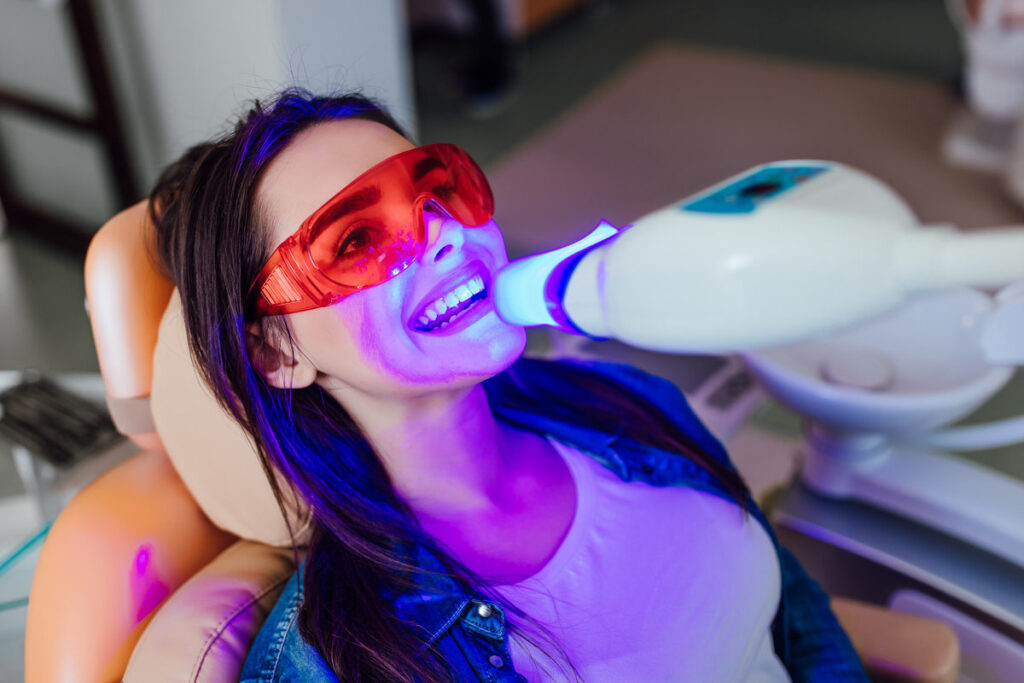
During in-office whitening, a curing light or laser is used to activate the professional-strength peroxide gel, and the active phase typically takes 30 to 60 minutes. Because a trained team member applies the gel, keeps it off your gums with a protective barrier, and controls exactly how long it stays on, the treatment is closely supervised from start to finish. If you notice discomfort during your appointment, we can pause, shorten a cycle, or adjust the approach right away.
Customized Whitening Trays
Customized whitening trays provide yet another layer of protection. Unlike one-size-fits-all strips, professional trays fit your teeth precisely, preventing gel from seeping onto your gums and causing irritation. We can also control the exact amount and strength of whitening agent you use and how long you wear the trays each day, ensuring even coverage without excess that might trigger sensitivity.
In-Office, Take-Home, and Store-Bought Whitening Compared
Each whitening option has a different balance of speed, strength, and sensitivity control. This side-by-side view can help you decide which one to ask about at your visit.
| Factor | In-Office Whitening | Custom Take-Home Trays | Store-Bought Products |
|---|---|---|---|
| Speed | Same-day results | Gradual over days to weeks | Slow and often limited |
| Gum protection | Protective barrier applied by our team | Trays shaped to your teeth | Generic fit, gel can reach gums |
| Sensitivity control | Supervised, adjustable in real time, fluoride afterward | Strength and wear time set for you | No professional oversight |
| Pre-whitening exam | Yes | Yes | No |
How Long Whitening Sensitivity Lasts and How to Ease It
For most people, whitening sensitivity is temporary. It tends to be strongest in the first day or two after treatment and usually fades within a few days as the teeth settle. If sensitivity is severe or lasts longer than a couple of weeks, contact us so we can check for an underlying issue such as a cavity or crack.
A few simple habits can make the days after whitening more comfortable:
- Use a sensitivity toothpaste. Products with potassium nitrate, started a week or two before whitening, can help calm the nerve.
- Stick to lukewarm foods and drinks. Very hot or cold items are the most common triggers right after treatment.
- Space out take-home sessions. Skipping a day or shortening wear time gives your teeth a chance to recover.
- Limit dark foods and drinks briefly. Coffee, tea, and red wine can stain more easily for a short time after whitening.
- Brush gently with a soft-bristled brush. Aggressive brushing can irritate teeth that are already sensitive.
Following these steps, along with any product recommendations from our team, helps most patients get through whitening with little more than mild, short-lived sensitivity.
Long-Term Benefits of Professional Whitening
Choosing professional whitening over drugstore alternatives gives you more than just immediate results. Our comprehensive approach helps us protect your comfort and your oral health throughout the process, offering the following long-term benefits.
Maintaining Enamel Health
The techniques and products we use are chosen to protect your enamel, which helps your teeth stay healthier and more resistant to future sensitivity. Our dentists can monitor your progress and adjust treatments as needed, catching potential issues before they become problems and ensuring your smile stays bright without compromising your oral health.
Results That Last Longer
Professional-strength gel can reach stains below the enamel surface that many store-bought products struggle to lift, so results often hold up well with good habits and occasional touch-ups. Fewer repeat treatments means less overall exposure to whitening agents and lower sensitivity risk over time. Keep in mind that whitening works on natural enamel only. Crowns, fillings, and veneers will not change color, and some deep intrinsic stains respond better to options like dental bonding.
The Confidence Factor
The confidence boost from a professionally whitened smile extends far beyond aesthetics. When you know your teeth look their best without the constant worry of sensitivity, you smile more freely in photos, conversations, and everyday interactions. This positive change can improve your personal and professional relationships, making the investment in professional whitening worthwhile on multiple levels.
Achieve Your Brightest Smile With Whitening at Floss & Company
Your path to a radiant, comfortable smile starts with a team that puts your needs first. At Floss & Co., Dr. Martha Silva, a Fellow of the Academy of General Dentistry, works alongside our doctors to provide professional whitening that balances visible results with your comfort. We invest in state-of-the-art technology to give our patients the safest, most comfortable experience possible, and we tailor every whitening plan to your enamel, your shade goals, and your sensitivity history.
We serve the Midway and Chicago community with dedication and skill, working with you to find treatment options that suit your lifestyle and goals. Whether you’re preparing for a special event or simply want to refresh your appearance, our team is ready to help you shine. Contact us today to schedule your consultation and discover how professional whitening can transform your smile while keeping your comfort intact.
Frequently Asked Questions About Teeth Whitening and Sensitivity
Can I whiten my teeth if I already have sensitive teeth?
Often, yes. We start by finding the cause of your sensitivity, since cavities, cracks, or exposed roots should be treated first. From there, we can use desensitizing treatments, adjust gel strength, and shorten sessions so you can whiten more comfortably. Custom take-home trays are often a good fit for sensitive teeth because the pace is gentler.
How long does sensitivity last after teeth whitening?
For most people, it is strongest in the first day or two and fades within a few days. Using a sensitivity toothpaste and avoiding very hot or cold foods can help. If discomfort is severe or lasts more than a couple of weeks, contact our office so we can take a look.
Is in-office whitening or take-home whitening better for sensitive teeth?
Both can work. In-office whitening is closely supervised and can be adjusted during your appointment, with fluoride applied afterward. Take-home trays let you whiten gradually and skip days if your teeth need a break. We will recommend the option that best matches your sensitivity history and your timeline.
Does teeth whitening damage enamel?
When it is done under a dentist’s guidance and used as directed, professional whitening is considered safe for enamel. The sensitivity some people feel is usually temporary and is not a sign of permanent damage. Problems are more likely when store-bought products are overused or applied to teeth with untreated dental issues.
Will whitening change the color of my crowns or fillings?
No. Whitening only lightens natural tooth enamel. Crowns, fillings, bonding, and veneers keep their original shade, so we will plan around any visible restorations. Some patients whiten first and then update older front restorations to match their new shade.
About the Author
Dentist, Floss & Co.
Dr. Martha Silva earned her Doctor of Dental Surgery degree from the University of Illinois College of Dentistry and served as an active-duty dentist in the U.S. Army. With 14 years of clinical experience, she is a Fellow of the Academy of General Dentistry and is pursuing her Mastership through advanced training in restorative and cosmetic dentistry.