
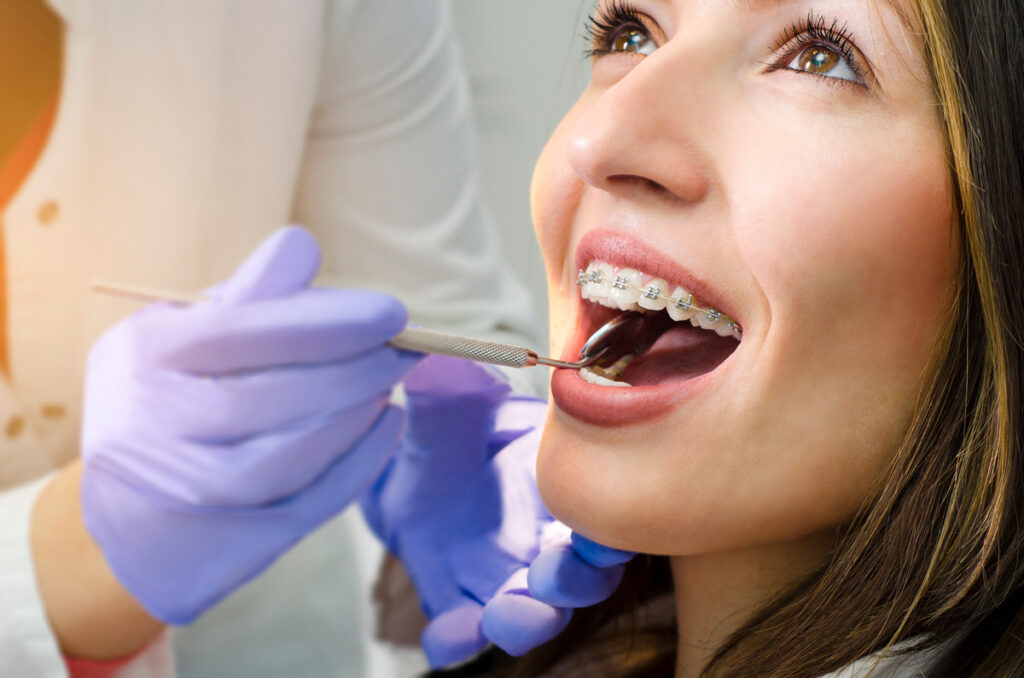
Traditional orthodontics has long focused on moving teeth into straight lines, but what if there’s a better way? Modern airway expansion techniques are changing orthodontic care by addressing the root causes of dental problems rather than only treating the symptoms. This approach considers your entire airway system, not just tooth alignment.
At Floss & Co., Dr. Murphy and Dr. Silva understand true orthodontic success means more than a beautiful smile. Our airway expansion treatments represent a fundamental shift from traditional methods, offering patients improved breathing, better sleep, and enhanced overall health alongside straighter teeth.
Traditional Orthodontics vs. Modern Airway Expansion
While traditional orthodontics have been tried and true for decades, modern approaches differ by addressing root causes of airway problems, creating space for better breathing, and providing more comprehensive health benefits. These approaches have real differences that can help you understand how modern techniques have transformed dental care.
Traditional Orthodontics
Traditional orthodontics operates on a relatively straightforward principle: move teeth into proper alignment within the existing jaw structure. This time-tested approach has helped millions achieve straighter smiles, but it often works within significant limitations. Brackets, wires, and elastics gradually shift teeth into predetermined positions over months or years. While effective for alignment, this approach does not always address whether there is adequate space for all teeth to function optimally.
Traditional methods typically accept the current size and shape of your mouth as fixed parameters. When teeth do not fit properly, a common solution involves extracting healthy teeth to create space for the remaining ones. This approach can achieve straight teeth but may compromise facial support and overall oral volume in some cases.
Modern Airway Expansion
Instead of simply rearranging teeth within existing space, airway expansion techniques create more room by expanding the upper jaw and improving the entire airway passage. These methods address the underlying developmental issues that can contribute to breathing problems. Because orthodontic problems often stem from underdeveloped jaws and restricted breathing passages, the American Association of Orthodontists recommends children see an orthodontist by age seven. Airway expansion can begin at this early age when the jaw is still developing.
Airway expansion offers benefits that extend beyond straight teeth. Patients often experience improved sleep quality, reduced snoring, and better overall energy levels. The expanded airway can allow for more efficient breathing, which may positively affect concentration, athletic performance, and general well-being.
What Are the Key Differences Between Traditional Orthodontics and Modern Airway Expansion Treatments
The distinctions between traditional orthodontics and airway expansion become clear when examining their fundamental approaches to common problems. The differences between these techniques include the following.
Space Management Philosophy
Traditional orthodontics views limited space as a constraint to work around, often requiring extractions to accommodate remaining teeth. Airway expansion addresses limited space as the primary issue to resolve, focusing on creating sufficient room for all teeth to function naturally.
Timing and Age Considerations
Traditional orthodontic treatment typically waits until all permanent teeth have erupted, usually around age 12 or later. Airway expansion can begin much earlier, sometimes as young as age six or seven, when the jaw is still developing and more responsive to expansion. Our early orthodontic treatment options are built around this window of jaw development.
Early intervention with airway expansion capitalizes on natural growth patterns. The upper jaw consists of two separate bones that do not fuse until the mid-teens, making expansion easier and more stable when performed at younger ages.
Treatment Duration and Comfort
Patients often find airway expansion comfortable when it works with the body’s natural growth patterns, particularly during childhood and the early teen years. Many patients report feeling better, sleeping more soundly, and breathing more easily within weeks of beginning treatment, though individual timelines vary.
Long-Term Outcomes and Stability
Traditional orthodontics that relies on extractions can sometimes lead to a flatter facial profile and reduced lip support, which may restrict airway space. Airway expansion aims to maintain or enhance facial volume by preserving teeth and expanding the underlying bone structure. This difference can have implications for sleep quality, energy levels, and overall health over time.
Airway expansion often provides more stable long-term results because it addresses the underlying causes of crowding rather than just managing symptoms. When teeth have adequate space and proper tongue posture is supported, the likelihood of relapse tends to decrease.
How Advanced Expansion Techniques Like MARPE Expand Options for Adults
One of the biggest historical limitations of palate expansion was age. Because the upper jaw fuses by the mid-teens in most people, traditional expanders were considered a childhood-only treatment. Newer techniques, such as miniscrew-assisted rapid palatal expansion, use small anchors placed in the bone to achieve controlled expansion in adults whose palates have already fused.
At Floss & Co., our MARPE expander option gives adult patients who were previously told expansion was not possible for them a non-surgical route to a wider airway and more stable bite. This matters for anyone comparing traditional orthodontics to airway-focused care: age alone no longer rules out expansion as an option, even though the ideal window for growth-based expansion remains childhood.
What the Research Says About Palatal Expansion and Airway Health
The connection between palate width and airway function is not just a clinical theory. Research examining the effects of maxillary expansion on airway dimensions has found that widening the upper jaw can increase nasal cavity volume and is associated with measurable improvements in markers of sleep-disordered breathing in some patients. A review of maxillary palatal expansion and its impact on airway dimensions and sleep-disordered breathing supports the idea that structural changes to the palate can influence how well a person breathes, both while awake and asleep.
This is a meaningful distinction from traditional orthodontics, which was not originally designed with breathing outcomes in mind. As airway-focused approaches have gained more clinical attention, more orthodontists now evaluate both alignment and airway function together rather than treating them as separate concerns.
Learn More About Airway-Focused Orthodontics at Floss & Co.
Understanding the differences between orthodontic approaches helps you make informed decisions about your care. While traditional orthodontics remains valuable for certain cases, airway expansion offers a more comprehensive approach to oral health and overall well-being. At Floss & Co., Dr. Murphy and Dr. Silva combine the best of both approaches, using airway expansion techniques when appropriate while incorporating traditional methods as needed, for both pediatric and adult patients.
Our team believes successful orthodontic treatment should improve your ability to breathe, sleep, and function optimally in addition to improving your smile’s appearance. When you choose our practice, you are choosing a team that recognizes the connection between airway function and overall well-being. To learn more about how modern airway expansion can benefit you or your child, contact our office to schedule a consultation.
Frequently Asked Questions About Airway Expansion vs. Traditional Orthodontics
Is airway expansion a replacement for braces?
Not always. Airway expansion often works alongside traditional orthodontics rather than replacing it entirely. Many patients complete an expansion phase first to create adequate space and support airway function, then move into braces or clear aligners to finish aligning the teeth.
Can adults still get airway expansion if their jaw has already fused?
Yes, in many cases. Techniques such as miniscrew-assisted rapid palatal expansion are designed specifically for adults whose upper jaw has already fused, using small bone anchors to achieve controlled widening without traditional jaw surgery.
At what age should a child first be evaluated for airway-focused orthodontics?
The American Association of Orthodontists recommends an orthodontic evaluation by age seven. This allows an airway-focused practice to identify a narrow palate or developing breathing concern while the jaw is still growing and more responsive to treatment.
Does airway expansion take longer than traditional orthodontic treatment?
Timelines vary by patient and by how much expansion is needed. Some patients notice changes in breathing within weeks, while full treatment, including any follow-up alignment, can take longer. Your provider can give you a personalized timeline after an evaluation.
How do I know if my child needs airway expansion instead of standard braces?
Signs worth discussing at a consultation include a narrow or high palate, mouth breathing, snoring, crowded teeth, or restless sleep. An airway-focused evaluation looks at these factors alongside standard bite alignment to recommend the most appropriate treatment path.