

Medically Reviewed by Dr. Izzy Naem, DDS on July 28, 2026
Airway expansion is a dental treatment that gradually widens a narrow upper jaw, increasing space in the oral cavity and nasal passages to improve breathing. A constricted palate or underdeveloped jaw may lead to chronic fatigue, restless sleep, crowded teeth, and persistent mouth breathing. Airway expansion targets the structural causes of these concerns rather than only addressing symptoms.
At Floss & Co., adult airway expansion is a key service, reflecting our team’s understanding of the strong link between oral structure and overall health. Serving the Midway and Chicago communities, we use a patient-centered approach, collaborating with each individual to determine the most appropriate treatment for their unique anatomy and goals.
What Airway Expansion Actually Does
Airway expansion refers to a range of treatments designed to widen the upper jaw (maxilla), creating more space in the oral cavity and nasal passages. When the maxilla is narrow, the tongue has less room to rest properly, and the nasal airway can become restricted. By gradually widening the arch, the treatment opens space for better airflow and proper tongue posture.
Expanding the Upper Jaw
The most common form of airway expansion involves an appliance that applies gentle, consistent pressure to the upper arch. Over time, this pressure encourages the palate to widen. In children, this process takes advantage of the natural growth windows when the bones are still developing and more responsive to change. In adults, the treatment process may differ slightly but remains an effective option for the right candidate.
How the Airway Connects to the Jaw
The relationship between the jaw and the airway is well documented. A 2023 study published in the National Institutes of Health’s research database found that maxillary expansion in growing children produced measurable increases in upper airway volume. This connection is why pediatric airway expansion is particularly valuable when caught early, though adults benefit from treatment as well. A more recent 2026 review similarly found measurable skeletal and airway changes from maxillary expansion, with the greatest respiratory improvements observed in growing patients.
How Airway Expansion Creates Space
Regardless of your age, airway expansion works by using a custom-fitted appliance to apply steady, gentle pressure to the upper arch over an extended period. The appliance is designed from your own scans, so it fits precisely against the roof of your mouth rather than forcing movement your anatomy cannot support.
That pressure encourages gradual remodeling of the bone and tissue involved, which is why the process happens over months rather than days. As the arch widens, the floor of the nasal cavity can open along with it, creating more room for your tongue to rest properly and supporting easier nasal breathing over time.
Airway Expansion in Children Versus Adults
Many adults assume that once their jaw has finished growing, expansion is no longer an option. That is not quite accurate. Children benefit from a natural advantage, since the two halves of the upper jaw have not yet fully fused and can be gently separated and guided into a wider position relatively quickly. This is part of why pediatric evaluation at the right age can make a meaningful difference in how a child’s airway and bite develop.
Adult bone is still living tissue capable of remodeling, though the process tends to be slower and relies on different appliance designs, such as a MARPE expander, to achieve gradual widening without the rapid separation used in younger patients. Adult expansion is typically measured in months rather than weeks, with steady, incremental change rather than a fast adjustment. The goal in either case is the same: creating enough room for the tongue and airway to function without unnecessary strain on the jaw and bite.
Adults considering expansion sometimes worry about visible changes to their smile partway through treatment. A small space occasionally appears between the front teeth as the arch widens, which is generally a sign that the bone is responding as expected rather than a cause for concern, and any resulting gaps can typically be closed with limited orthodontic treatment once the expansion phase is complete. Our team walks through what to expect at each stage so there are no surprises along the way.
Who May Benefit From Airway Expansion
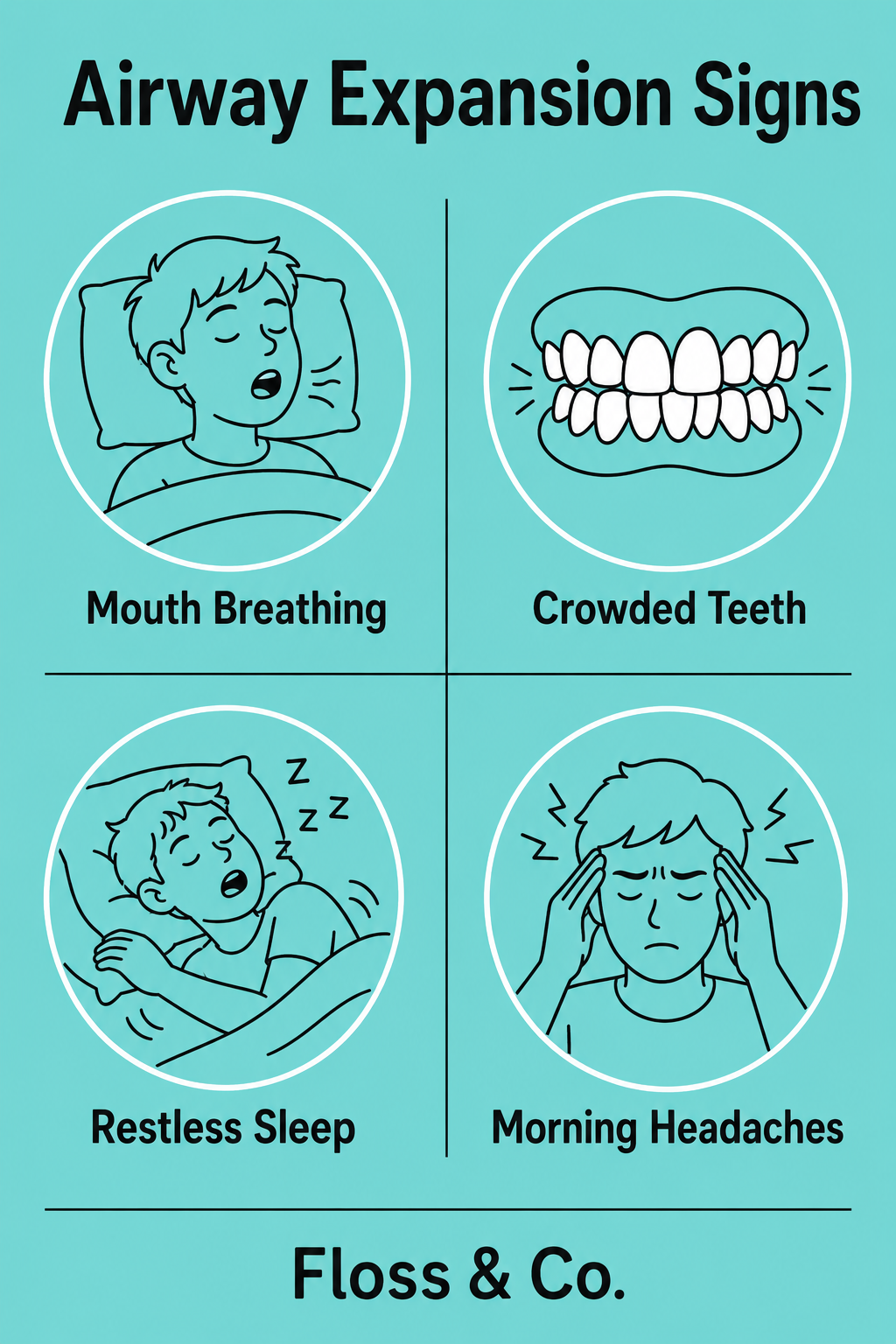
Airway expansion is not a one-size-fits-all treatment, but there are common signs it may be worth exploring. Those who experience the following may find airway expansion addresses concerns they did not know were dental in origin:
- Mouth breathing: Persistent breathing through the mouth, especially during sleep
- Crowded teeth: Teeth that have shifted or overlapped due to a narrow arch
- Sleep disturbances: Restless sleep, snoring, or waking up feeling unrefreshed
- Chronic headaches: Frequent morning headaches that may relate to airway strain
In children, these concerns can also show up as bedwetting, difficulty concentrating in school, or behavior that resembles attention difficulties, since interrupted sleep affects children differently than adults. In adults, the same underlying airway restriction more often presents as daytime fatigue, chronic nasal congestion, or a narrow smile with visible crowding. These symptoms overlap with many other conditions, which is why a thorough evaluation is always the starting point. The oral health issues that airway expansion may help extend beyond breathing alone, touching on bite alignment, jaw position, and even posture.
Airway Expansion and Sleep Apnea
One area where airway expansion has generated significant interest is in sleep apnea treatment. When the airway is too narrow, the soft tissues at the back of the throat can partially or fully collapse during sleep, causing breathing to stop. Widening the upper arch may create more space, helping the airway remain open throughout the night.
This approach is not a replacement for a medical diagnosis of sleep apnea, but it can play a meaningful role in a comprehensive treatment plan. Adults dealing with sleep-disordered breathing are often excellent candidates for an airway-focused evaluation, and some patients find that addressing the underlying jaw structure reduces their reliance on other breathing support over time.
The Role of Orthodontics in Airway-Focused Treatment
Airway expansion and orthodontics are closely related. When the jaw is widened, there is often more room for teeth to align properly without extraction. Orthodontic treatment at Floss & Co. incorporates airway assessments into consultations, meaning tooth alignment and breathing health are evaluated together rather than in isolation. Patients exploring Invisalign for mild to moderate alignment issues often have this airway connection considered as part of their treatment plan as well. This kind of coordinated care can lead to outcomes that benefit long-term health well beyond a straighter smile, and it also connects closely with jaw joint health addressed through our TMJ and airway evaluations.
Start Your Airway Evaluation at Floss & Co.
At Floss & Co., airway expansion is approached with the thoughtful, individualized care our practice is known for throughout the Midway and Chicago areas. Our team is committed to investing in state-of-the-art technology to provide patients with a thorough, comfortable experience. We work with each person to find the treatment option that best fits their needs.
If you have been wondering whether your breathing, sleep, or jaw structure may be connected, the best next step is to speak with our team. Contact our office to schedule a consultation and find out whether airway expansion may be right for you.
Frequently Asked Questions About Airway Expansion
Is airway expansion painful for children or adults?
Most patients describe a feeling of pressure or mild stretching rather than pain, and any initial discomfort typically fades within a day or two of each adjustment. Because the appliance applies gentle, steady pressure rather than force, the process is generally comfortable and easy to tolerate for both children and adults.
How is airway expansion different for adults compared to children?
Children benefit from natural growth windows, since the upper jaw has not yet fully fused and can be widened relatively efficiently. Adult bone can still remodel, but the process is slower and uses different appliance designs to achieve gradual, steady widening rather than rapid separation.
Can airway expansion replace a CPAP machine for sleep apnea?
Airway expansion is not a replacement for a medical sleep apnea diagnosis or treatment plan. It can play a meaningful role alongside other therapies by addressing the underlying jaw structure, and some patients find it reduces their reliance on other breathing support, but any changes to sleep apnea treatment should be discussed with your physician.
How long does airway expansion treatment take?
Timelines vary by age and case. Children often see arch widening over a period of months, while adult expansion tends to be a slower, more gradual process measured in months as well, since adult bone remodels at a different pace than a still-developing jaw.
Is airway expansion covered by dental insurance?
Coverage varies by provider and plan, and some cases may involve both dental and medical benefits depending on the diagnosis. Our team can help you understand your specific coverage and financing options, including CareCredit and Lending Club, during your consultation.
About the Author
Dentist, Floss & Co.
Dr. Izzy Naem completed advanced training in dental sleep medicine in 2018 and is a member of the American Academy of Dental Sleep Medicine. He helps patients address snoring and obstructive sleep apnea through oral appliance therapy and airway-focused treatment planning.