
Medically Reviewed by Dr. Martha Silva, DDS on September 30, 2026
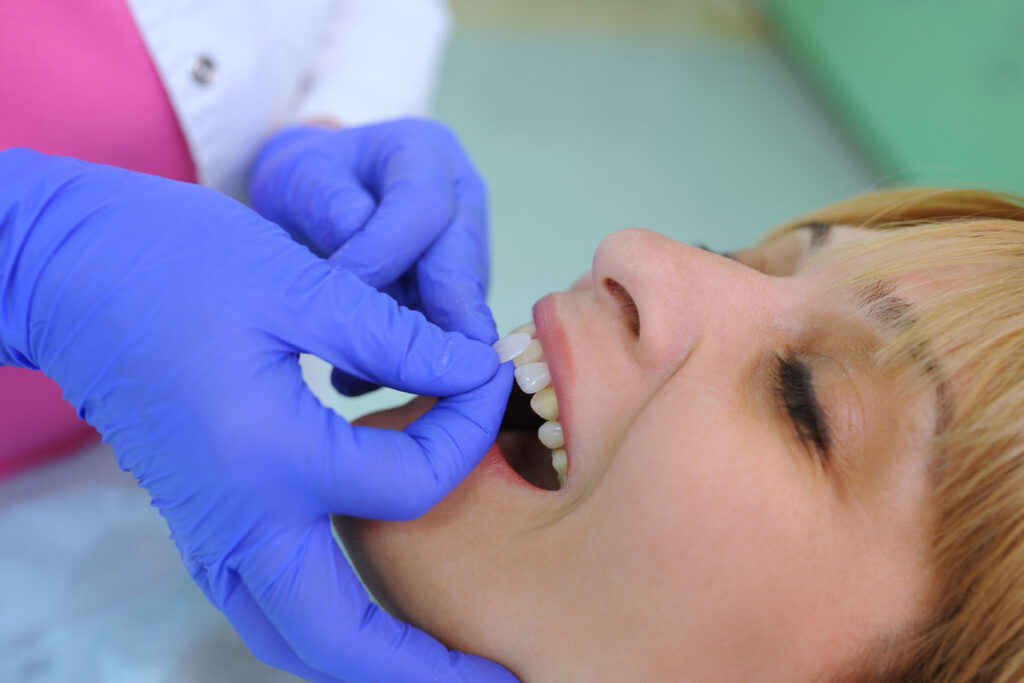
During a resin veneer consultation, you can expect a conversation about what you want to change, an exam of your teeth, gums, and bite, and a discussion of shade and shape. Placement is often completed in a single visit, where composite resin is bonded to the front of the tooth, sculpted by hand, hardened with a curing light, and polished. Because little or no enamel usually needs to be removed, resin veneers are one of the more conservative ways to address chips, small gaps, discoloration, and uneven tooth shapes.
At Floss & Co., resin veneers are designed to be an accessible option for patients who want a real change without an overwhelming commitment. Our team takes a personalized, patient-first approach from the first conversation through your final polish, so you always know what is coming next and feel confident in your decision.
What Happens at Your Resin Veneer Consultation
Your consultation is where everything starts, and it is more of a conversation than an exam. We want to understand what you are hoping to change about your smile and whether resin veneers are the right fit for your goals, your bite, and your overall dental health.
Reviewing Your Smile Goals
We will ask what specifically bothers you and what kind of result you are imagining. Whether you want to close a small gap, cover a chip, or create a more uniform look across several teeth, knowing your goals helps us plan the most effective approach. We may show you examples or discuss shade options, so you have a clear sense of what resin can achieve and where its limits are.
Evaluating Your Dental Health
Before any cosmetic work begins, we assess the overall health of your teeth and gums. If there is an underlying issue, like a cavity or gum inflammation, it needs to be addressed first. Resin veneers work best on a healthy foundation, and we will be upfront about what needs to happen before placement can begin. This step is also when we discuss how many teeth are involved and whether a smile makeover approach makes more sense for your situation.
Checking Your Bite and Habits
Resin is durable, but it is not as hard as natural enamel or porcelain. We look at how your upper and lower teeth meet, and we ask about habits like nail biting, chewing on pens, or grinding at night. If you grind, we may recommend a night guard to protect your veneers, and we will factor your bite into how thick and how long each veneer should be.
Choosing Your Shade
Composite resin does not change color with whitening. If you would like brighter teeth overall, teeth whitening is usually done before your veneers so we can match the resin to your new shade. We will talk through timing at your consultation so the final result looks even across your smile.
Is a Resin Veneer Right for You?
Resin veneers tend to be a good fit for patients with healthy teeth and gums who want to improve the look of a few teeth without major tooth reduction. They are often a strong choice for small chips, minor gaps, mildly uneven edges, and stains that do not respond to whitening. They may be less suitable for teeth with large fillings, significant structural damage, or a heavy grinding habit, where a crown or porcelain restoration could hold up better. If you are weighing those options, our post on veneers vs. dental crowns walks through the differences.
The table below compares resin and porcelain veneers on the points patients ask about most often.
| Consideration | Resin (Composite) Veneers | Porcelain Veneers |
|---|---|---|
| Visits | Often one appointment | Usually two or more |
| Tooth preparation | Little to none in many cases | A thin layer of enamel is typically removed |
| Stain resistance | Can pick up stains over time | Highly stain resistant |
| Repairs | Chips can often be patched chairside | Damage usually means replacement |
| Typical cost | Lower per tooth | Higher per tooth |
Neither option is right for everyone. Our goal at your consultation is to recommend the one that fits your teeth, your habits, and your budget.
What the Placement Process Looks Like
One of the biggest advantages of resin veneers is that they can often be completed in a single visit. A two-year follow-up case report published through the National Library of Medicine described direct composite veneers as a single-visit, minimally invasive, and aesthetic option when they are placed carefully with proper technique. That is a meaningful benefit for patients with busy schedules or those who want to avoid multiple trips to the office.
Preparing the Tooth Surface
In many cases, little to no tooth structure needs to be removed before resin is applied. If any minor preparation is needed, it is limited to the outermost layer of enamel. We will make sure you are comfortable throughout this step, and many patients do not need anesthesia at all. This is part of what makes resin such a gentle option compared to more involved cosmetic dentistry procedures.
Applying and Sculpting the Resin
The composite resin is applied directly to your tooth in layers, then carefully shaped to match the surrounding teeth. This hands-on process is where our team’s artistry shows. We take our time building the right contour, and we pay close attention to how each veneer interacts with your bite and the natural curve of your smile. Once the shape is right, the resin is hardened with a curing light.
Finishing and Polishing
After the resin is set, we refine the surface so it looks smooth and blends with your other teeth. The finishing and polishing stage is what gives resin veneers their natural sheen. Resin can also be adjusted or repaired later if needed, which is a meaningful long-term advantage. For patients who want to explore additional refinements, dental bonding uses similar composite materials and may complement the overall result.
What to Expect After Your Appointment
Most patients leave their resin veneer appointment with their new smile already in place. There is no lab wait time and no temporary restorations to manage. You can eat and go about your day normally, though we will share guidance on what to avoid in the first 24 to 48 hours, such as dark coffee, tea, and red wine, to let everything settle.
With proper care, resin veneers can last for several years, and how long yours last depends on your bite, habits, and home care. Brushing gently with a soft brush, flossing daily, and keeping up with regular cleanings all help preserve the look of the resin. Periodic polishing at your checkups can refresh the surface, and small chips can often be repaired rather than replaced. For a closer look at what composite veneers can achieve, see our post on getting a camera-ready smile with composite veneers.
Cost and Financing for Resin Veneers
Resin veneers generally cost less per tooth than porcelain because they are made chairside and do not require an outside lab. Your total depends on how many teeth are involved and how much shaping each one needs, and we provide a clear estimate before treatment begins. Because veneers are usually considered cosmetic, dental insurance often does not cover them, although coverage can vary if a veneer also repairs damage.
If you would like to spread out the cost, we offer financing through CareCredit, which may allow you to pay over time. Our team is happy to walk you through the numbers during your consultation so there are no surprises.
Schedule Your Resin Veneer Consultation at Floss & Co.
Dr. Martha Silva earned her Doctor of Dental Surgery from the University of Illinois College of Dentistry, served as a dentist in the U.S. Army, and holds Fellowship with the Academy of General Dentistry. She and our team believe cosmetic dentistry should feel approachable, not intimidating, and we will answer your questions honestly so you can decide whether resin veneers are the right move for your smile. We welcome patients of all backgrounds and take pride in creating an environment where everyone feels comfortable and seen.
Whether you are just beginning to explore your options or you are ready to move forward, we would love to meet with you. Contact our office to schedule your consultation and take the first step toward a smile you feel great about.
Frequently Asked Questions About Resin Veneers
Do resin veneers hurt?
Most patients find resin veneer placement comfortable. Because little or no enamel is usually removed, many people do not need anesthesia at all. If some light preparation is needed, we can numb the area, and some patients notice mild sensitivity for a day or two afterward.
How long does a resin veneer appointment take?
It depends on how many teeth are being treated. One or two veneers may take about an hour or so, while a full set across the front teeth can take several hours because each veneer is sculpted by hand. We will give you a time estimate at your consultation so you can plan your day.
Are resin veneers reversible?
Resin veneers are often considered reversible or close to it because little or no enamel is removed in many cases. If light preparation is needed, that small change to the enamel is permanent. We will explain exactly what your plan involves before we begin.
Can I whiten my teeth after getting resin veneers?
Whitening will lighten your natural teeth but not the resin, which can leave a visible mismatch. That is why we usually recommend whitening first and matching the veneers to your new shade. If your natural teeth darken over time, we can discuss polishing or updating the veneers.
What foods should I avoid with resin veneers?
Avoid biting directly into very hard foods like ice, hard candy, or bones, and try not to use your front teeth to open packages. Coffee, tea, red wine, and tobacco can stain resin over time, so rinsing with water after dark drinks and keeping up with cleanings helps keep veneers looking fresh.
About the Author
General Dentist, Floss & Co.
Dr. Martha Silva earned her Doctor of Dental Surgery degree from the University of Illinois College of Dentistry and served as a dentist in the U.S. Army. She holds Fellowship with the Academy of General Dentistry and is an Invisalign Certified Provider.