
Medically Reviewed by Dr. Catherine Murphy, DDS, MSD on September 30, 2026
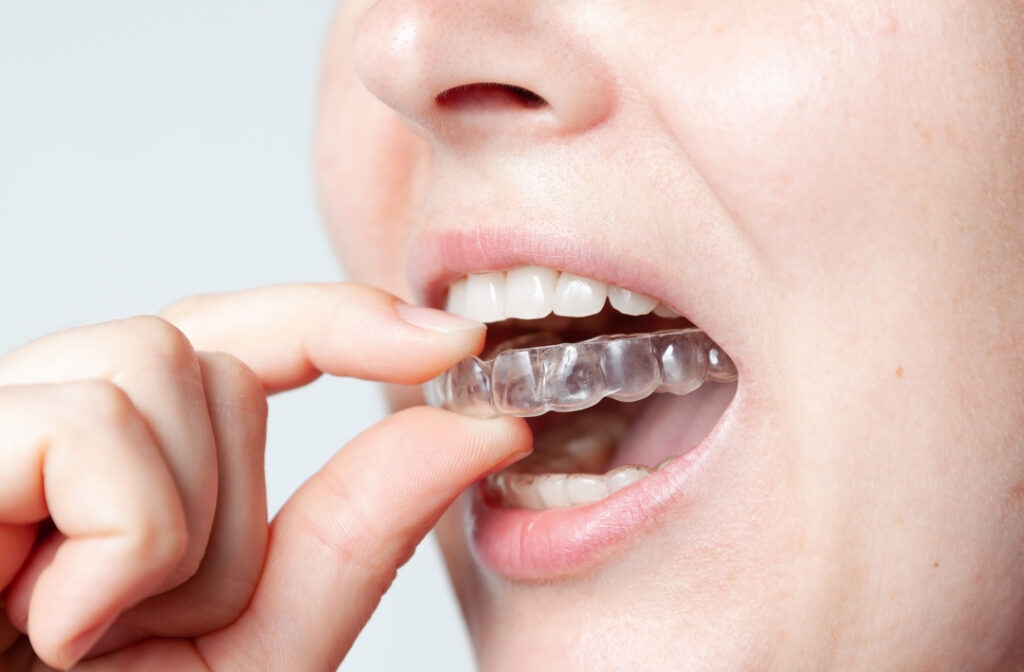
Braces or clear aligners can sometimes play a role in easing jaw discomfort, but they are not a proven, stand-alone treatment for temporomandibular joint (TMJ) disorders. Current guidance from the National Institute of Dental and Craniofacial Research (NIDCR) says there is not enough evidence that treatments which permanently change the bite relieve TMJ disorders, and that most jaw joint and muscle problems respond to simple, reversible care first. Orthodontics tends to make the most sense when you already have a bite or alignment problem worth correcting on its own merits, and jaw comfort is one of several goals.
At Floss & Co., our team looks at jaw pain from several angles, including the joint, the chewing muscles, clenching habits, sleep, and breathing, before recommending anything. Through our TMJ and TMD care, we start with conservative options and bring in orthodontic treatment only when a clear alignment issue is part of the picture. That approach keeps your options open and avoids committing to a long treatment that may not address what is actually driving your discomfort.
What Causes TMJ Disorders?
TMJ disorders, often shortened to TMD, are a group of more than 30 conditions that affect the jaw joints and the muscles that move them. Symptoms can include jaw pain or tenderness, clicking or popping, a jaw that feels stuck or tired, facial aching, headaches, and earaches. According to the NIDCR, TMD affects roughly 5% of U.S. adults and is about twice as common in women.
Most cases have more than one contributor. Muscle tension, daytime clenching, nighttime grinding, stress, arthritis in the joint, past injury, and disrupted sleep can all play a part. A bite that does not come together evenly may add strain for some people, but NIDCR notes that research does not support the belief that a bad bite or orthodontic treatment causes TMD. That is an important distinction, because it means straightening teeth does not automatically fix jaw pain.
Can Orthodontic Treatment Help With TMJ Symptoms?
Orthodontic treatment may help some patients feel more comfortable when a specific alignment problem is contributing to how the jaw muscles work. For example, a crossbite, a significant overbite or underbite, or crowding that forces the jaw to shift sideways to close can change how chewing forces are distributed. Correcting those problems is worthwhile for function and long-term tooth health, and some patients notice their jaw feels less fatigued as their bite becomes more balanced.
What orthodontics cannot do is guarantee TMJ relief. The evidence linking bite correction to lasting improvement in TMD pain is limited, and NIDCR recommends discussing benefits, risks, and alternatives before any treatment that permanently changes the teeth or bite. We follow that same principle. If orthodontics is part of your plan, it is because it addresses a real alignment need, not because it is being sold as a cure for jaw pain.
Traditional Braces
For more complex bite problems, braces can move teeth precisely in multiple directions and correct how the upper and lower arches meet. As the bite improves, the jaw may be able to close into a more natural, centered position rather than shifting to find contact. Some patients do experience temporary soreness as teeth move, so we monitor jaw comfort throughout treatment and adjust the plan if symptoms flare.
Clear Aligners
Invisalign and other clear aligners use a series of custom trays to shift teeth gradually, and they work well for many mild to moderate alignment issues. Because the trays are removable and have smooth surfaces, some patients find them easier on the cheeks and lips. Aligners are not designed as a TMJ device, though, and heavy clenching on the trays can occasionally aggravate sore muscles, so we talk through your habits before recommending them.
When Orthodontics May or May Not Be the Right Fit
Because TMJ disorders have so many possible causes, the first question is always what is driving your symptoms. The comparison below reflects how we generally think about where orthodontics fits and where other care is more likely to help.
| Orthodontics May Be Worth Discussing When | Other Care Usually Comes First When |
|---|---|
| You have a crossbite, open bite, or deep bite that needs correction anyway | Pain is mainly from tight, overworked jaw muscles |
| Your jaw shifts sideways or forward to bring your teeth together | Clenching or grinding, especially during sleep, is the main pattern |
| Crowding or tooth position is causing uneven wear or chewing problems | Arthritis, a past injury, or joint inflammation is involved |
| Conservative care has helped, and you also want to improve alignment | Symptoms are new, mild, or come and go with stress |
Many patients fall into both columns, which is why a thorough evaluation matters more than any single appliance or treatment.
Conservative TMJ Care Comes First
NIDCR points out that many jaw joint and muscle problems are temporary and do not get worse, so simple treatment is often all that is needed. For most patients, that means reversible steps that calm the joint and muscles before anything more involved is considered. Our team may recommend a combination of the following, depending on your evaluation:
- Jaw rest and soft foods: Giving the joint a break from hard, chewy, or oversized bites during a flare.
- Heat, cold, and gentle stretching: Simple home care that can ease muscle tightness when done consistently.
- Habit awareness: Noticing daytime clenching, gum chewing, or nail biting and working to reduce them.
- A custom night guard: Our custom mouth guards protect teeth from grinding and may help some patients, although research on pain relief from oral appliances is mixed.
- Sleep and breathing review: Checking whether disrupted breathing at night could be contributing to clenching.
If these steps bring relief, you may not need anything further. If symptoms persist, we look more closely at contributing factors, including bite alignment, before discussing next steps.
The Airway and Jaw Connection
Jaw position, tongue posture, and breathing are closely linked. When the airway is narrow or partially blocked during sleep, some people clench or grind as their body works to keep breathing, and that nightly strain can leave the jaw sore by morning. This is one reason our team looks at breathing patterns alongside jaw symptoms, and you can read more about it on our TMJ and airway connection page.
If signs such as loud snoring, waking unrefreshed, or morning headaches show up alongside jaw pain, we may recommend further evaluation. In some cases, addressing breathing and sleep is a more direct path to comfort than changing the bite. When orthodontic care is part of that plan, Dr. Murphy considers airway and jaw position together rather than focusing on straight teeth alone.
What to Expect if Orthodontics Is Part of Your Plan
When orthodontic treatment is recommended, it is usually because a bite or alignment problem is worth correcting for its own sake, with jaw comfort as a potential added benefit. Treatment length depends on your case, and adult orthodontics often takes a year or more. We check in on jaw symptoms at every visit, and if they worsen, we pause to reassess rather than pressing ahead.
Some patients notice their jaw feels less tired as their bite becomes more even, while others notice little change in joint symptoms and continue to rely on conservative care. Both outcomes are possible, and we will be honest with you about what to expect. After treatment, wearing your retainers as recommended helps keep your teeth in their new positions so the bite you worked for stays stable.
Get a Thorough Jaw Evaluation at Floss & Co.
Dr. Catherine Murphy completed her orthodontic residency at Indiana University School of Dentistry, where she earned her Master of Science in Dentistry, and she practiced general dentistry before focusing on orthodontics. She works alongside Dr. Martha Silva and Dr. Izzy Naem, so your evaluation can draw on orthodontic, general, and restorative perspectives in one office. Our goal is to find out what is actually behind your jaw pain and recommend the most conservative option that fits.
If clicking, soreness, or morning headaches have been hanging around, an evaluation is a good next step whether or not orthodontics ends up being part of your plan. Use our contact form to schedule a visit with our team.
Frequently Asked Questions About Orthodontics and TMJ
Can braces fix TMJ permanently?
Braces are not a proven permanent fix for TMJ disorders. The National Institute of Dental and Craniofacial Research reports there is not enough evidence that treatments which change the bite relieve TMD. Braces can correct real alignment problems, and some patients feel more comfortable afterward, but results vary and conservative care is usually the first step.
Can Invisalign make TMJ pain worse?
It can for some people. Teeth moving can cause temporary soreness, and patients who clench hard on their trays may notice tired or achy jaw muscles. Most patients wear aligners without jaw problems, but if you already have TMJ symptoms, tell our team so we can monitor your comfort and adjust the plan if needed.
Does a bad bite cause TMJ disorders?
Research does not support the idea that a bad bite by itself causes TMJ disorders. Muscle tension, clenching, grinding, arthritis, injury, stress, and sleep problems are common contributors. A bite that shifts the jaw to one side may add strain for some people, which is why we evaluate alignment as one factor among several.
What should I try first for jaw pain?
Start with simple, reversible steps such as eating softer foods during a flare, applying heat or cold, gentle jaw stretches, and cutting back on gum chewing and clenching. A custom night guard may help if you grind at night. If pain lasts more than a few weeks or your jaw locks, schedule an evaluation.
Is a night guard or orthodontics better for TMJ?
They do different jobs. A night guard is reversible and protects teeth from grinding, and it may ease symptoms for some patients. Orthodontics permanently changes tooth position and is best reserved for a genuine alignment problem. Many patients start with a night guard and home care, and consider orthodontics later only if their bite also needs correction.
About the Author
Dr. Catherine Murphy, DDS, MSD
Orthodontist, Floss & Co.
Dr. Catherine Murphy earned her Doctor of Dental Surgery from Indiana University School of Dentistry in 2005 and completed her orthodontic residency there, earning a Master of Science in Dentistry in 2010. She practiced general dentistry before moving into orthodontics, and she was inducted into the American College of Dentists in 2023.