
Medically Reviewed by Dr. Martha Silva, DDS on September 25, 2026

Gum disease is an infection and inflammation of the gums and bone that support your teeth, and it develops when plaque and bacteria are left to build up on and below the gumline. It begins as gingivitis, which is reversible, and can progress to periodontitis, which damages the tissue and bone holding your teeth in place. The longer plaque sits there, the greater your risk of developing gingivitis, which is the first stage of periodontitis. It is also far more common than many people assume: the CDC reports that about 4 in 10 U.S. adults age 30 and older have some level of periodontitis.
At Floss & Co., we treat your gums as a key part of your overall health, not an afterthought. Our dental cleanings and exams are designed to catch early signs of gum disease, remove the buildup brushing can miss, and give you a clear plan for keeping your smile healthy. Here is the good, the bad, and the ugly of what every patient should know.
The Good: Gum Disease Is Preventable and Often Reversible
The best news about gum disease is that you have a lot of control over it. In its earliest stage, gingivitis has not yet damaged the bone or connective tissue around your teeth. According to the American Academy of Periodontology, gingivitis is reversible with professional treatment and good at-home care.
That means consistent brushing, daily flossing, and regular professional cleanings can often stop gum disease before it becomes a long-term problem. Even when periodontitis has developed, treatment can help control the infection and protect the teeth you have. While there is no at-home cure for advanced gum disease, it is preventable, and every case can be managed with the right care plan built around your needs.
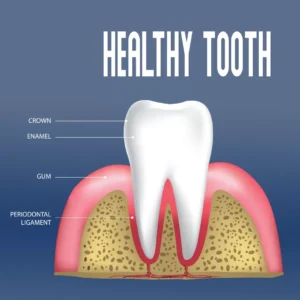
anatomy of tooth and gumline
Stages of Periodontitis
Gum disease usually progresses gradually, and it can become serious before you notice symptoms. The three stages below show how it typically advances when plaque is not removed.
Gingivitis
Gingivitis is where plaque and its by-products irritate the gums. It makes them tender, swollen, and much more likely to bleed while brushing or flossing. At this point, the damage is limited to the gum tissue, which is why early treatment is so effective.
Periodontitis
Periodontitis is stage two. Here, ongoing inflammation begins to break down the gum tissue, which detaches from the teeth to form pockets around the roots. These pockets trap more bacteria, leave root surfaces exposed, and make teeth more susceptible to decay and sensitivity.
Advanced Periodontitis
In advanced periodontitis, the pockets become deep as gum recession and bone loss progress. In turn, this causes loose teeth and changes in your bite, potentially leading to tooth loss. Missing teeth can later be replaced with options such as dental implants, but protecting your natural teeth is always the first goal.
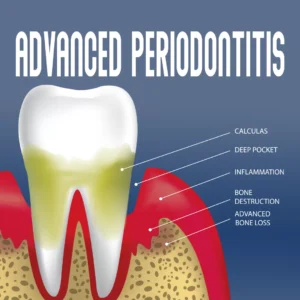
anatomy of advanced periodontitis
The Bad: Warning Signs You Should Not Ignore
Because gum disease is often painless in its early stages, knowing the signs helps you act sooner. Schedule an exam if you notice any of the following:
- Red, swollen, or tender gums
- Bleeding when you brush or floss
- Gums that are receding or pulling away from your teeth
- Persistent bad breath or a bad taste in your mouth
- Loose or sensitive teeth, or a change in how your teeth fit together
Any one of these signs is worth a closer look. The sooner we evaluate your gums, the more likely it is that simple treatment and better daily habits will be enough.
Health Risks of Periodontitis
Your mouth is connected to the rest of your body, and the inflammation from gum disease does not always stay in your gums. Research summarized by the American Academy of Periodontology has linked periodontal disease with several broader health concerns, though scientists are still studying exactly how these connections work.
These links are one more reason to treat bleeding or swollen gums seriously. If you manage a condition like diabetes or heart disease, let us know so we can tailor your care and cleaning schedule.
Common Risk Factors of Periodontal Disease
Some people are more prone to gum disease than others. These are the factors we watch most closely when building your care plan.
Hormonal changes, misaligned teeth, teeth grinding, and poor nutrition can also play a role. You cannot change your genes, but most of the other risk factors respond well to small, steady changes in daily habits.
The Ugly: What Happens When Gum Disease Goes Untreated
Left alone, gum disease rarely stays the same. Pockets deepen, the bone that anchors your teeth wears away, and teeth can shift, loosen, or eventually be lost. By that point, treatment is more involved and restoring a complete smile may require crowns, bridges, or implants.
The ongoing inflammation can also affect how comfortable it is to chew and how confident you feel about your breath and smile. That is why we encourage patients not to wait for pain. Gum disease is often quiet until it is advanced, and routine checkups are the most reliable way to find it early.
How Gum Disease Is Treated
Treatment depends on how far the disease has progressed. For gingivitis, a professional cleaning that removes plaque and tartar, paired with improved brushing and flossing, is often enough to bring the gums back to health. For patients with significant buildup below the gumline, a deeper cleaning called scaling and root planing clears bacteria from the root surfaces so the gums can reattach and heal.
After treatment, more frequent maintenance visits help keep pockets from returning. Our preventive dentistry approach focuses on this long-term protection, with a schedule that matches your risk level and a home care routine you can realistically follow. Your treatment plan is always based on your unique needs.
Protect Your Gums With Floss & Co.
Healthy gums are the foundation of a healthy smile. Dr. Martha Silva and our team provide general, restorative, and family dentistry for patients of all ages in Chicago, with a focus on finding problems early and explaining every option clearly. We welcome patients of all backgrounds and make sure every visit feels comfortable and judgment-free, no matter how long it has been since your last cleaning.
If your gums bleed, feel tender, or you are simply due for a checkup, now is a great time to get ahead of gum disease. Reach out through our contact form to schedule your visit.
Frequently Asked Questions About Gum Disease
Is gum disease reversible?
Gingivitis, the earliest stage of gum disease, is reversible with professional cleanings and consistent brushing and flossing. Once periodontitis has damaged bone and connective tissue, that loss cannot be fully reversed, but treatment can control the infection and help protect your teeth.
Why do my gums bleed when I brush or floss?
Bleeding gums are one of the most common early signs of gingivitis, caused by plaque irritating the gum tissue. Brushing too hard can also play a role. If bleeding lasts more than a week or two of gentle, consistent care, schedule an exam so we can check for gum disease.
Can gum disease cause tooth loss?
Yes. In advanced periodontitis, the bone and tissue that hold teeth in place break down, which can cause teeth to loosen and eventually fall out or require removal. Early treatment greatly lowers that risk.
What is a deep cleaning for gum disease?
A deep cleaning, also called scaling and root planing, removes plaque and tartar from below the gumline and smooths the root surfaces. This helps the gums heal and reattach to the teeth, and it is often recommended when gum pockets have started to form.
How often should I see the dentist to prevent gum disease?
The CDC recommends dental checkups at least once a year, and many patients benefit from cleanings every six months. If you have a history of gum disease or higher risk factors, we may recommend more frequent visits to keep your gums stable.
About the Author
Dentist, Floss & Co.
Dr. Martha Silva earned her Doctor of Dental Surgery degree from the University of Illinois College of Dentistry and brings 14 years of clinical experience in general, restorative, and family dentistry. She is a Fellow of the Academy of General Dentistry and previously served as an active-duty U.S. Army dentist.