
Losing a tooth is stressful enough without having to decode a new vocabulary list on top of it. If you have started researching replacement options, you have probably run into the terms “guided” and “traditional” implant surgery and wondered whether the difference actually matters, or if it is just dental jargon. That is a fair question, and the answer shapes how your treatment is planned, how precisely your implant is placed, and often how comfortable your recovery is.
We offer both approaches at Floss & Co., though we lean heavily on guided implant surgery because it makes the whole experience much more predictable. The biggest difference between the two methods comes down to planning. Traditional implant placement relies on your dentist’s training, physical impressions, and in-the-moment judgment during surgery, while guided implant surgery uses digital scans and 3D imaging to map out the exact position, angle, and depth of your implant before you ever sit in the chair.
How Traditional Implant Surgery Works
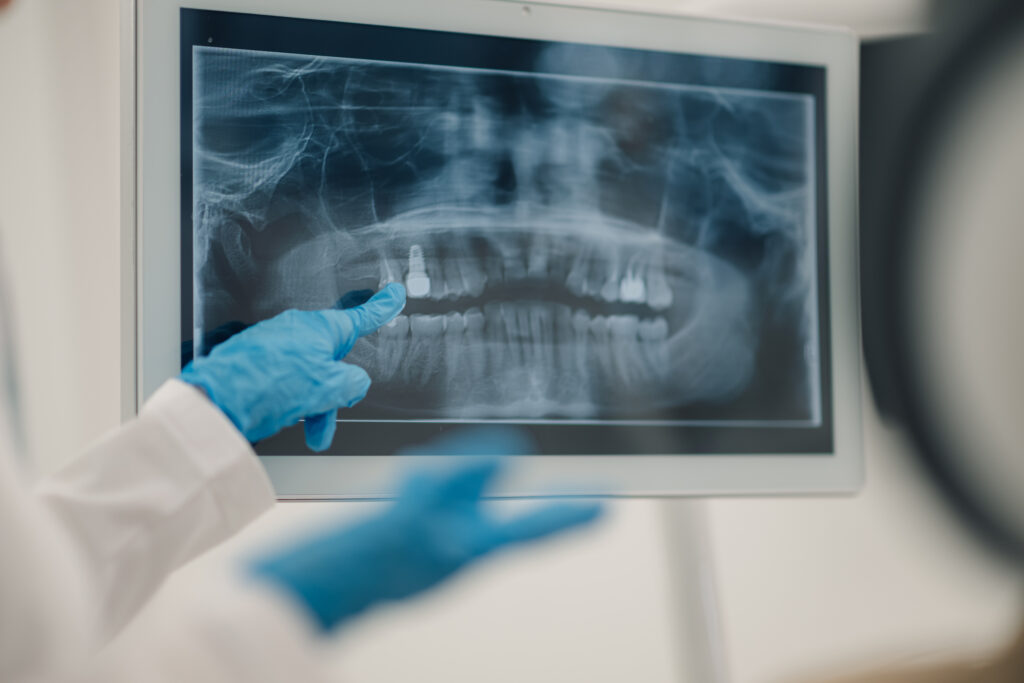
Traditional implant placement has been used successfully for decades, and it still works well in plenty of cases. We examine your mouth, review X-rays, and may take a digital scan to understand your bone structure and the surrounding teeth. From there, the implant is placed freehand, guided by training and clinical experience rather than a pre-built digital roadmap.
The tradeoff is that more of the decision-making happens in real time, which can mean a longer procedure while your dentist confirms depth and angle along the way. It is a tried-and-true method, but it leaves less room for pre-planning around things like nerve pathways or bone density before the first incision is made.
What Makes Guided Implant Surgery Different
Guided implant surgery starts well before you ever sit down for the procedure. We use 3D imaging to map your jawbone, nerve pathways, and surrounding teeth, then build a digital surgical guide that shows exactly where each implant should go, down to fractions of a millimeter. Because we have an in-house dental lab, that planning and fabrication happen under one roof instead of bouncing between outside vendors, so adjustments can be made quickly if something needs a closer look.
A 2023 systematic review of guided implant surgery studies found that digital surgical guides consistently produced less positional deviation than freehand placement, with most implants landing within a millimeter of the plan. That kind of precision is not just a technical detail. It translates into a procedure that is mapped out with far fewer surprises along the way.
What This Means for Your Comfort and Healing
Because guided surgery removes so much guesswork, patients often notice a few practical differences during treatment and afterward. The following factors come up most often in conversations with our patients considering the switch from a traditional approach:
- Shorter chair time, because the plan is already built before you arrive
- Fewer adjustments mid-procedure, which can mean less swelling afterward
- A clearer sense of what to expect going in, because the plan is visible beforehand
None of this means traditional implant surgery is a poor option. It simply means guided surgery gives both you and our team more information before treatment even begins, which tends to make the whole experience feel calmer.
Guided Planning for Single and Full Arch Implants
Guided surgery is not reserved for complex cases. If you are missing just one tooth, a single tooth implant benefits from the same digital precision as a larger case, because the guide still maps the ideal position relative to your neighboring teeth and nerves.
For patients missing several teeth in one arch, All-on-X relies on guided planning even more heavily. Because fewer implants and fewer incisions are needed with this approach, precise placement matters even more, and the result is often a faster healing process than older full-arch techniques required.
Ready to Learn More About Guided Implants? Contact Floss & Co. Today
Whether you are missing one tooth or considering a full-arch solution, Floss & Co. can walk you through which approach fits your situation and your comfort level with the process. We will review your scans together, answer your questions directly, and make sure you understand each step before anything is decided.
If you think a dental implant might be the right next step for you, reach out to our team at Floss & Co., and we will help you figure out whether a guided or traditional approach makes the most sense for your smile.