
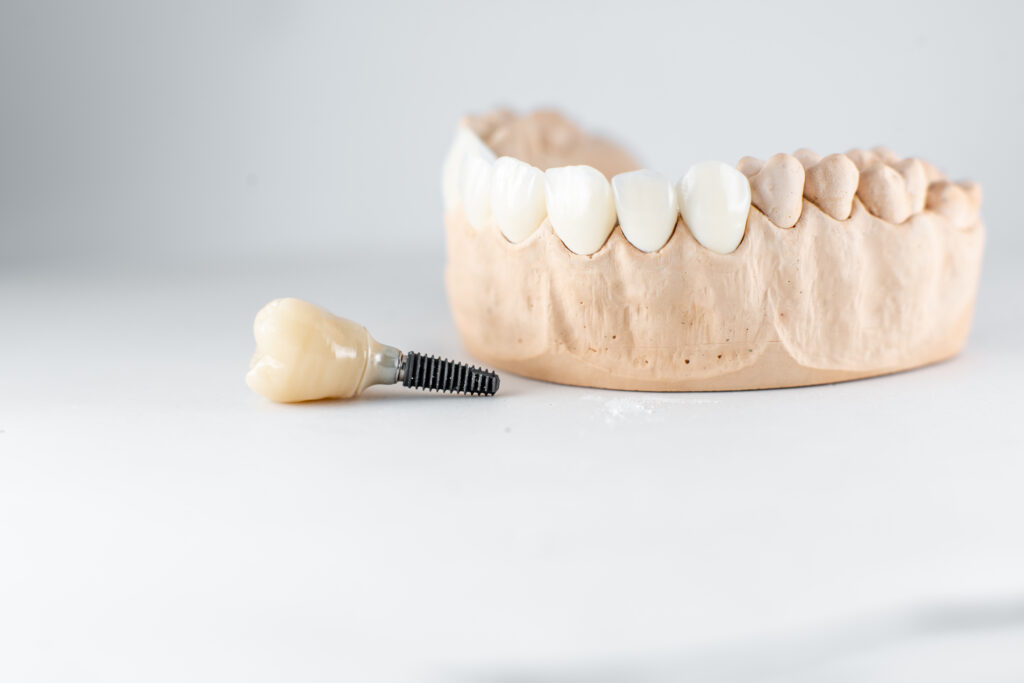
Losing a front tooth feels different from losing one further back. You smile at people. You talk in meetings. You see yourself in photos. So when the gap is right up front, it can feel urgent the moment it happens and raise questions that other dental work doesn’t. Will people be able to tell? Will it match the rest of your smile? Will it feel like your tooth again?
At Floss & Co., we treat a front tooth implant as its own kind of project because the bar is different. A back tooth mainly needs to do its job when you chew. A front tooth needs to do that too, but it also needs to disappear into your smile so nobody gives it a second thought, and that second part changes how we approach almost every step.
Your Smile Comes First in the Planning
With a single implant up front, how it looks is not an afterthought we handle at the end. It is part of the plan from your very first visit with us. We look closely at your gum line, bite angle, and the shape and shade of the teeth around the gap because the crown we eventually place has to blend with all of it. For a spot this visible, we also use guided implant surgery to plan exact placement before we ever pick up a drill, giving us more precision in an area with little room for error.
That kind of matching takes a careful eye. Tooth color is not one flat shade. It shifts slightly from the gum line to the edge, and real teeth let a bit of light pass through in a way that looks different from a solid white surface. A crown that skips this step can look fine under one light and oddly flat in daylight or photos. We build that natural variation into your crown from the start, so you are not stuck with a fix later.
Healing Looks a Little Different Up Front
Depending on what we find at your consultation, we may be able to place your implant right after removing the tooth, or we may recommend letting the area heal first before moving forward. Front teeth tend to have thinner bone and gum tissue than back teeth, so we pay extra attention to protecting that area while you heal.
We also watch for something that rarely comes up with back-tooth work: the shape of the gum tissue around your new tooth. Healthy, well-shaped gum tissue around the crown is a big part of what makes a front tooth implant look like it was always there. Getting that shape right sometimes means wearing a temporary crown first, which gently guides your gum tissue into place before we seat the final one. It is one more step, but it is often what makes the difference between a repair you can spot and one nobody notices at all.
What to Expect in the First Few Weeks
Most people recover from a front tooth implant without much trouble, though we hear the same handful of questions again and again. A little peace of mind about what is normal goes a long way, so here is what tends to come up most in the first few weeks:
- A bit of swelling near the gum line is common and usually settles within a few days.
- You will likely have a temporary tooth in place while your implant bonds with the bone, so you’ll rarely walk around with a visible gap.
- Your speech may sound slightly different for a short while as you get used to the new tooth, similar to getting used to a retainer.
- Whitening will not change your crown’s shade, so it is best to whiten before we match your final restoration.
Knowing what is coming ahead of time tends to ease a lot of the worry around a restoration this visible. According to a 20-year meta-analysis published through the National Library of Medicine, dental implants show strong survival outcomes even decades after placement, especially when patients keep up with long-term follow-up care, and that holds just as true for a front tooth as anywhere else in your mouth.
A Tooth Replacement Nobody Should Notice at Floss & Co.
A front tooth implant is done right when people stop noticing it altogether. That is the standard we hold ourselves to from the first dental implant consultation through your final crown, and it is part of why we handle each visible restoration with so much care, including finishing many of them in our own in-house dental lab so we can keep a close eye on fit and shade along the way.
You also do not need to be in pain to come see us about a gap up front. Our team brings together shade matching, timing, and gum shaping as one connected process rather than separate steps, because that is what it takes for a front tooth implant to truly blend in. If you’re considering a single implant for a front tooth and want to talk through what that would look like for you, reach out to our team to schedule a consultation.